
Supported metal catalysts feature catalytically active metals dispersed across porous carriers such as alumina, activated carbon, or silica. These metals are typically present in […]
Supported metal catalysts feature catalytically active metals dispersed across porous carriers such as alumina, activated carbon, or silica. These metals are typically present in a microcrystalline form, maximizing surface area and enhancing reactivity. However, in practice, only the surface-exposed metal atoms participate in catalytic reactions—atoms buried within the bulk structure remain inactive.
As a result, metal dispersion—the proportion of surface atoms relative to the total metal content—plays a pivotal role in catalytic performance. This is commonly quantified by IUPAC as:
Dispersion (%) = (Number of surface metal atoms / Total number of metal atoms) × 100
Highly dispersed catalysts offer enhanced activity, selectivity, and resistance to deactivation phenomena such as carbon deposition and sintering. Since many catalysts utilize precious metals, maximizing dispersion not only improves efficiency but also reduces material costs. Thus, accurately measuring dispersion is essential for both technical optimization and economic viability.
A variety of techniques are available to evaluate metal dispersion, broadly categorized into physical and chemical methods [1]. Physical techniques such as X-ray Diffraction (XRD), X-ray Photoelectron Spectroscopy (XPS), and Transmission Electron Microscopy (TEM) estimate dispersion indirectly by assessing crystallite size or surface composition. However, these approaches often require complex modeling and may struggle with heterogeneous or amorphous samples.
In contrast, chemical adsorption methods—such as pulse chemisorption and static chemisorption—offer a more direct measurement by quantifying the amount of probe gas that binds to active metal sites.
These techniques are especially valuable for characterizing the reactive surface area most relevant to catalytic behavior [2].
Chemisorption can also provide insights into crystallite size, active surface area, and the relative contributions of reversible and irreversible adsorption. Despite its power, the static method has some limitations: high-vacuum requirements, longer analysis times for multi-point isotherms, and potential errors from effects like hydrogen spillover [3] or strong metal–support interactions that block access to reactive sites [4].
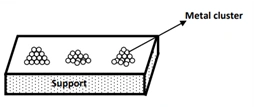
Figure 1: Representation of metal sites on a support
Dynamic chemisorption—commonly known as pulse chemisorption—is a widely used technique for measuring the surface-active metal sites in supported catalysts. In this method, reactive gas molecules selectively adsorb onto exposed metal atoms, without interacting with the carrier support.
The experiment is performed under isothermal conditions, typically at ambient temperature and atmospheric pressure. A calibrated sample loop injects fixed volumes of reactive gas into a flowing carrier gas stream. As the gas mixture passes over the catalyst bed, the reactive species adsorb onto available metal sites—often through associative adsorption—while unadsorbed gas continues downstream to a detector, such as a thermal conductivity detector (TCD).
Successive gas pulses are introduced until the catalyst surface becomes saturated and no further adsorption occurs. This saturation behavior, reflected in the detector signal, allows precise quantification of the adsorbed gas and thus enables accurate calculation of metal dispersion and active surface area.
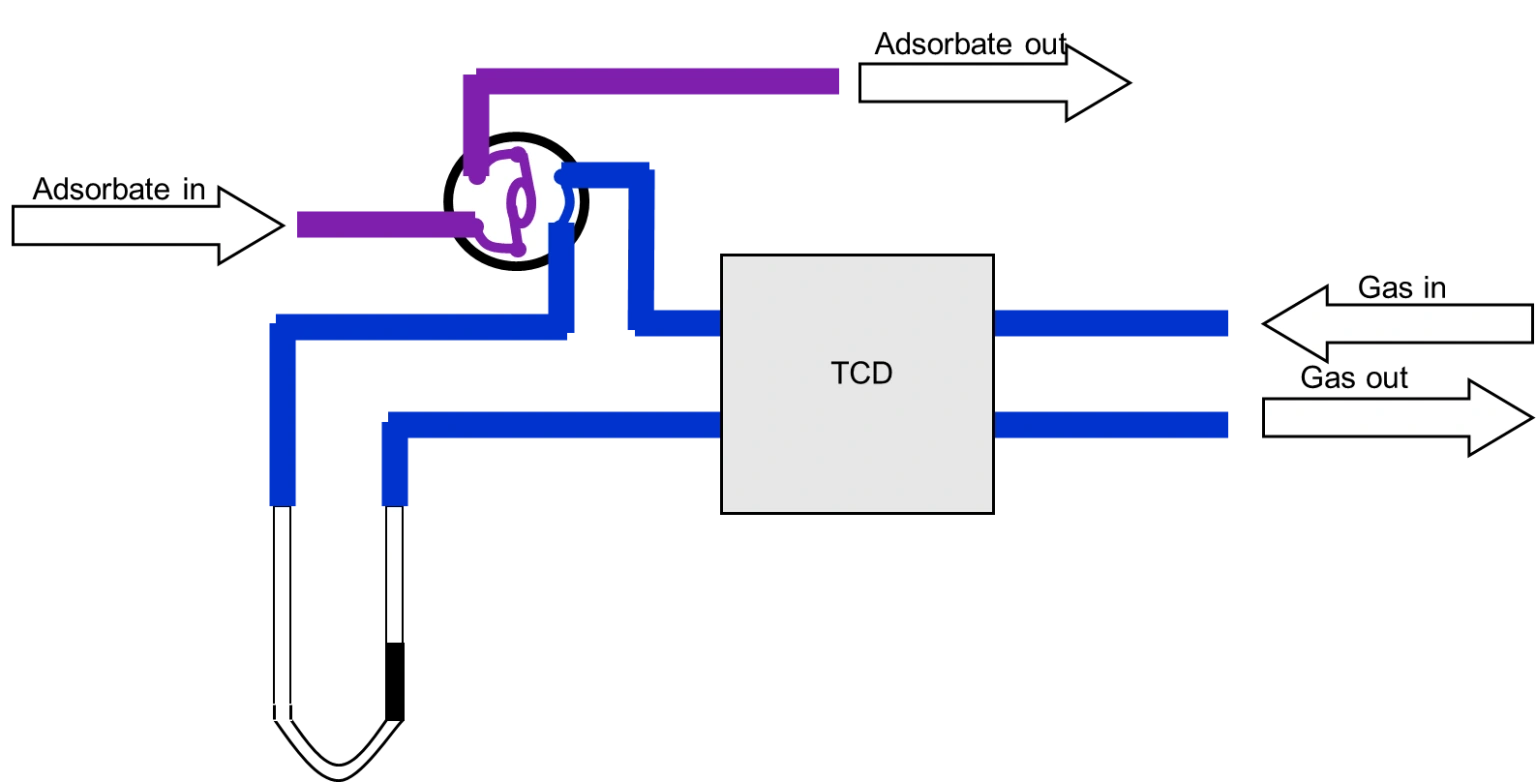
Figure 2: Pulse Chemisorption Instrumentation
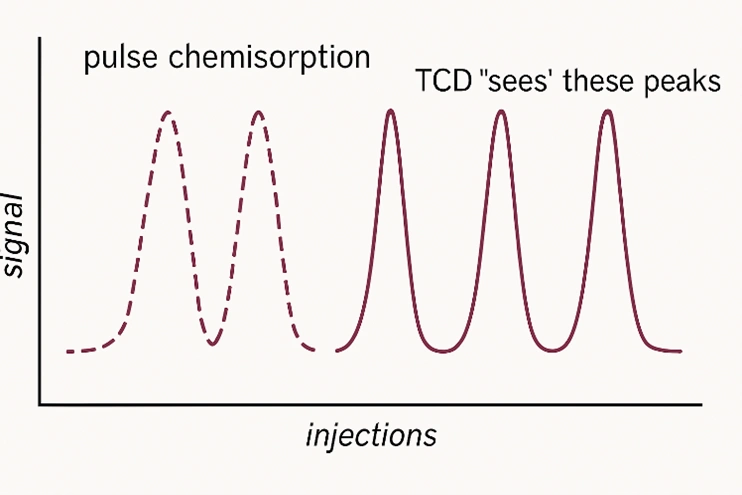
Figure 3: “Missing Peaks” representation of the TCD signal
In pulse chemisorption, the adsorption quantity is the key parameter for quantitative analysis. It represents the amount of reactive gas adsorbed per unit mass of catalyst, typically expressed in µmol/g. This value is conceptually aligned with physical adsorption but derived through chemical interaction between the adsorbate and active metal sites.
During the experiment, a fixed volume of reactive gas is repeatedly pulsed into a flowing carrier gas stream through a calibrated sample loop. As the gas passes over the catalyst bed, it interacts with exposed metal sites, while unadsorbed gas is carried to a thermal conductivity detector (TCD), generating a series of pulse peaks (Figure 3).
As the surface nears saturation, gas uptake decreases and the detector signal stabilizes. The final peak, corresponding to complete saturation, serves as the baseline for calculating gas uptake in earlier pulses.
Quantification of adsorption is based on comparing the area of each unsaturated pulse to the average area of saturated peaks. Two primary calculations are used:
Quantitative Correction Value (Cv):
Cv = (V_loop × C_gas) / (ΣA_sat / n_sat)
Where:
Sample Adsorption Amount (Uptake):
Uptake = Cv × Σ(A_i – A_sat-avg)
Where:
The calculated adsorption quantity forms the basis for further analysis of catalyst structure, including:
Required known values:
The stoichiometric factor reflects the number of metal atoms associated with each adsorbed gas molecule and depends on the adsorption mechanism:
– Linear: SF = 1
– Bridging: SF = 0.5
– Multi-type (on oxides): SF = 1–n
Metal dispersion indicates the percentage of metal atoms located on the surface:
Dispersion (%) = [Adsorption (µmol/g) × Relative atomic mass (g/mol)] / [Metal loading (%) × Stoichiometric factor × 100]
Where:
Crystallite size can be estimated using geometric models. Two common models are:
Hemispherical Model:
Particle diameter (Å) = 6 × 10⁶ / [Density (g/cm³) × Max SSA (m²/g) × Dispersion (%)]
Cubic Model:
Cube edge length (Å) = 5 × 10⁶ / [Density (g/cm³) × Max SSA (m²/g) × Dispersion (%)]
Where:
Note: These formulas are valid for single-metal catalysts. For bimetallic or alloy systems, peak separation via Temperature-Programmed Desorption (TPD) is recommended for accurate analysis.
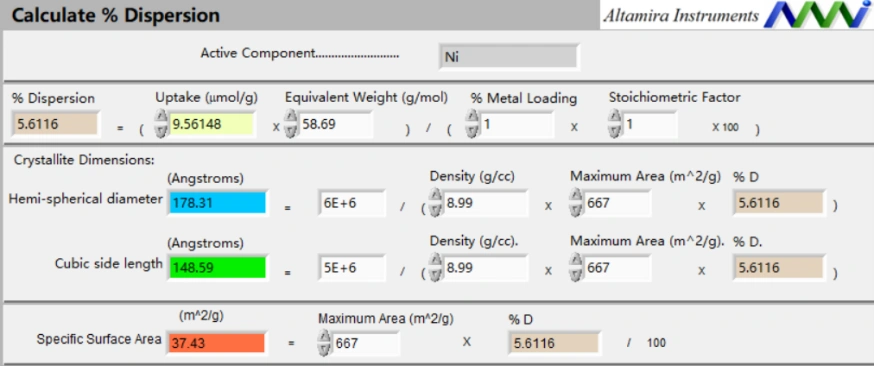
Figure 4: Software Calculation Interface
The metal dispersion degree of a 1 wt% Pt/CeO₂ catalyst was measured using the AMI-300 chemisorption analyzer, known for its high performance and precision in pulse chemisorption experiments.
The sample underwent a pre-treatment process prior to measurement. The conditions are outlined below: