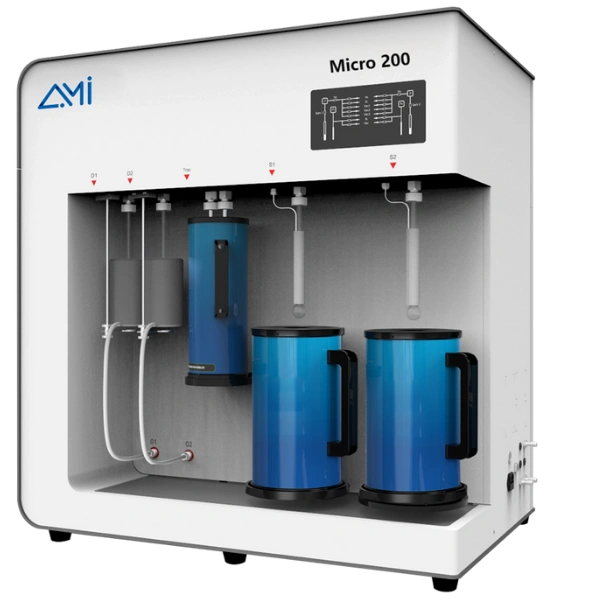

Micro 200

● Available in multiple models to support diverse lab-throughput needs.
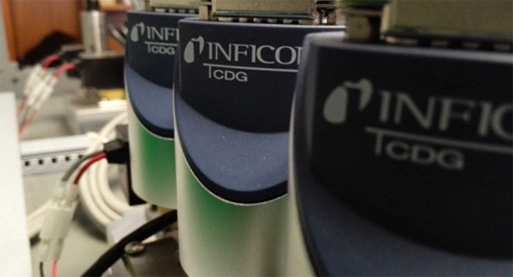
● 2 analysis stations with high-vacuum pump and up to 3 pressure sensors per station.
● Simultaneous testing with different adsorbate gases across all active stations.

Product Overview

Introduction

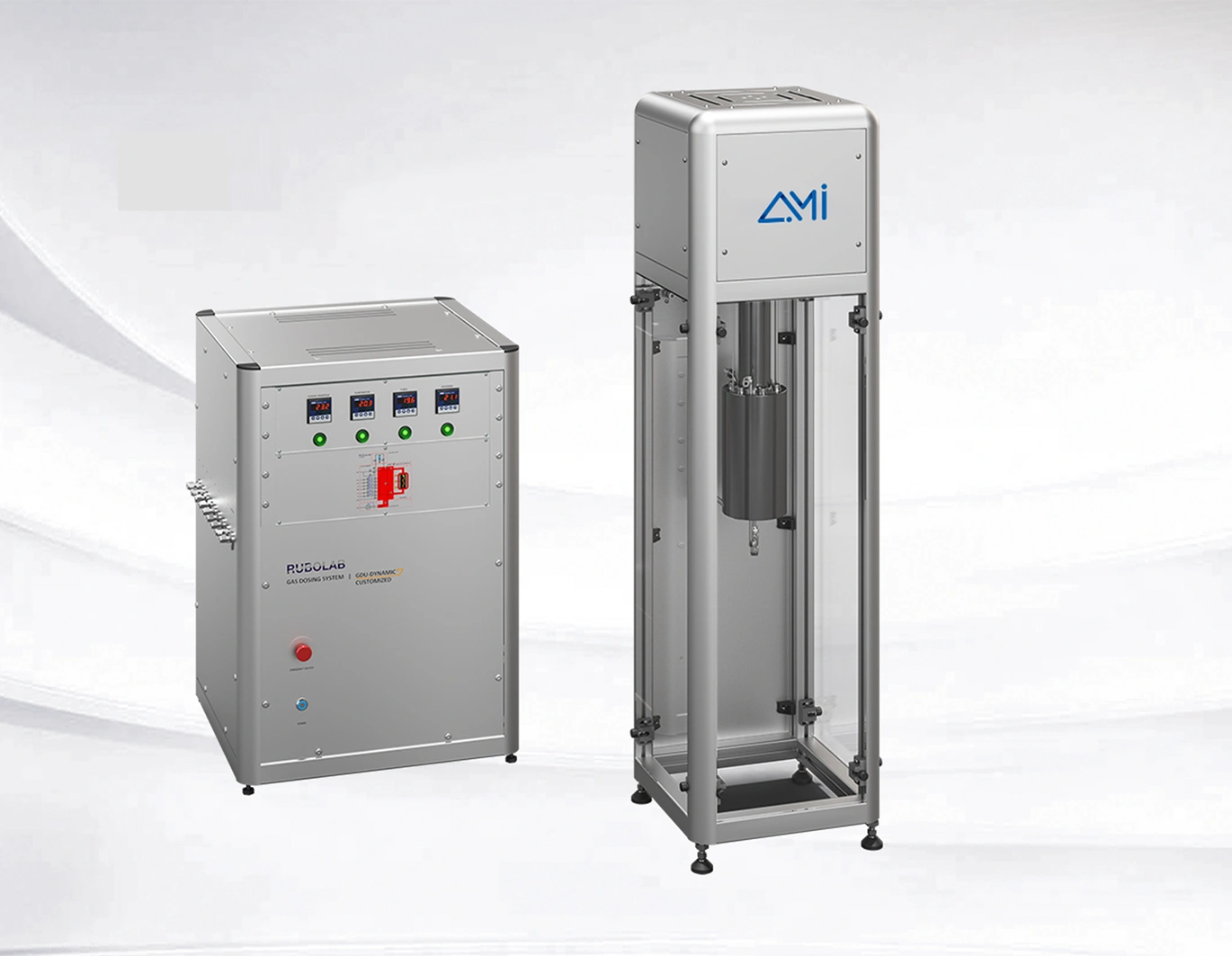
The AMI-Micro 200 Series is a high-precision physisorption instrument designed for the accurate determination of specific surface area and pore size distribution in a wide range of materials. The series is available in three distinct models—A, B, and C—each offering specialized capabilities to accommodate various analytical requirements (refer to the specification table for further details).

The Micro 200 B and C models can be equipped with high-sensitivity 10 torr or 1 torr pressure transducers (with an optional 0.1 torr configuration) and a turbo molecular pump achieving an ultimate pressure of 10⁻⁸ Pa, ensuring exceptional accuracy in the characterization of microporous structures. Furthermore, all analysis stations incorporate in-situ sample preparation, effectively minimizing contamination and enhancing measurement reliability.

Engineered for advanced materials research, the AMI-Micro 200 Series is particularly well-suited for the characterization of microporous materials, including metal-organic frameworks (MOFs), molecular sieves, catalysts, activated carbon, and other porous substances, providing precise and reproducible gas adsorption analysis.
Features

Module Design for Minimal Dead Volume

The internal gas path design of the instrument adopts a unique integrated metal module design, which not only reduces the internal dead volume space but also lowers the system leakage rate.

Saturated Vapor Pressure P0

An independent P0 pressure transducer i sconfigured at 133 kPa for P0 value testing, enabling real-time P/P0 measurement for more accurate and reliable test data. Alternatively, an atmospheric pressure input method can be used to determine P0.

jw bk100 3

Independent analysis ports

With independent analysis ports, the system employs a unique vacuum control logic that allows each station to operate without disruption, even when using a single mechanical pump or pump group. This enables simultaneous, independent experiments, meeting diverse adsorbent testing needs while ensuring high efficiency.

High-Precision Micropore Distribution Analysis (Micro 200 B and C)

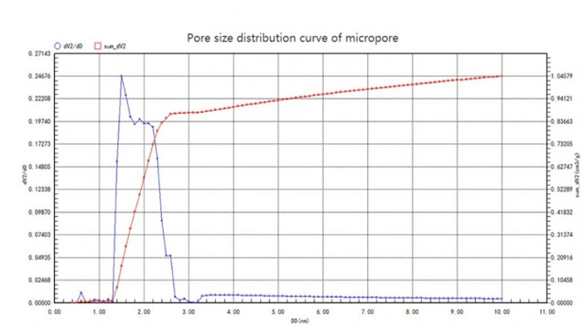
Utilizes advanced micropore models, including the Horvath-Kawazoe (HK) and Saito-Foley (SF) methods, toaccurately determine pore size distribution. Ensures an aperture deviation of less than 0.02 nm, providing precise characterization of microporous materials in gas adsorption studies.

Thermal Stabilization

A core rod in the sample tube reduces dead volume and stabilizes the cold free space coefficient, while an iso-thermal jacket maintains a constant thermal profile along the tube. Additionally, automatic helium correction ensures precise calibration for any powder or particulate material, minimizing temperature- related deviations during analysis.

Customizable Selection of Pressure Transducers

Depending on the model, the AMI-Micro 200 Series offers various quantities and types of pressure transducers. Among them, the Micro 200 C, equipped with a 1 Torr transducer (selectable 0.1 Torr), enables a partial pressure (P/P0) of up to 10‾ (N₂/77 K) in physical adsorption analysis.


Optimized Manifold Contamination Control

This system features a multi-channel, adjustable, and parallel vacuum design with segmented vacuum control. This setup effectively prevents samples from being drawn up into the analyzer therefore preventing manifold contamination.

Turbo Molecular Pump

A Turbo Molecular pump is included on the MicroMicro 200C. Achieving ultimate pressures of 10‾ Pa, this system ensures a solid foundation for precise micropore analysis at ultra- low pressures.

Multiple Degassing Stations for Sample Preparation

Equipped with two (2) integrated degassing ports and two (2) in-situ degassing ports. Each port offers independent temperature control from ambient to 400°C (Optional: RT-500°C), ensuring precise sample preparation. In- situ degassing enhances microporous material analysis by providing superior efficiency over ex- situ methods.

Software

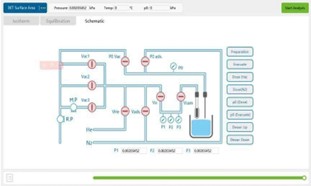
PAS Software is an intelligent solution for operation control, data acquisition, calculation, analysis, and report generation on the Windows platform. It communicates with the host via the LAN port and can remotely control multiple instruments simultaneously.

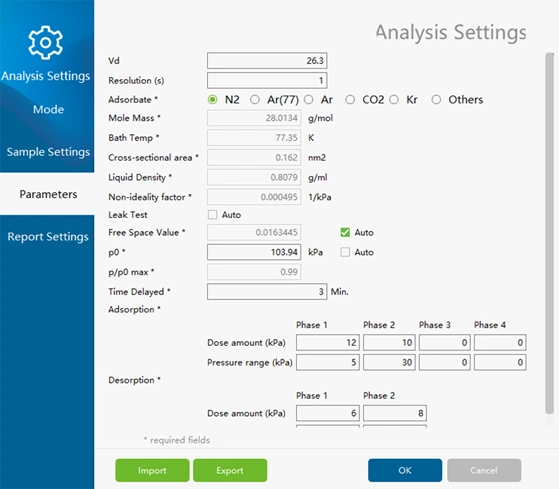
PAS Software adopts a unique intake control method, optimizing pressure in the adsorption and desorption processes through a six-stage setting, which improves testing efficiency.

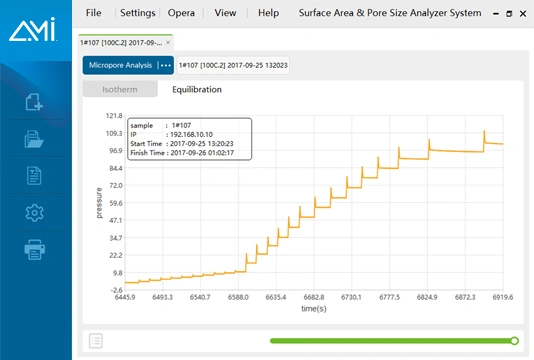
Each adsorption equilibrium process is dynamically displayed on the test interface. Adsorption characteristics of the sample can be easily understood.

Picture2

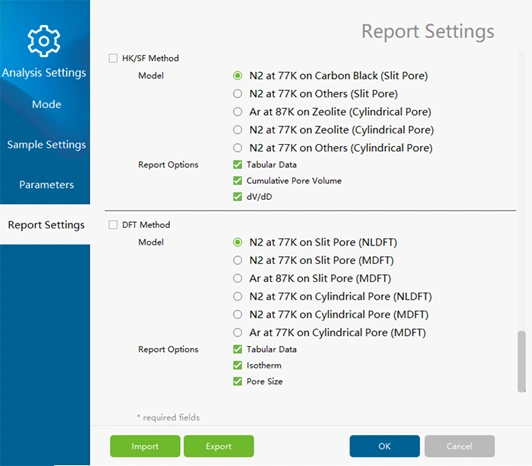
A clear and concise report setting interface, including the following:

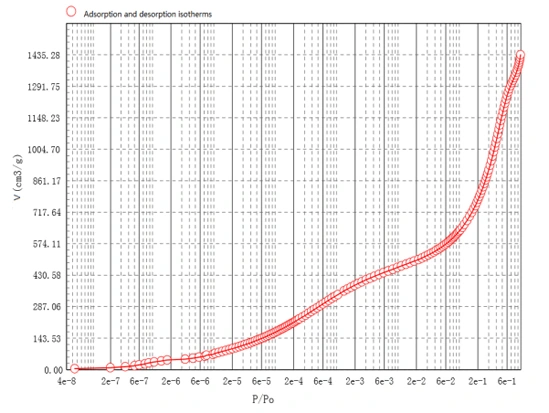
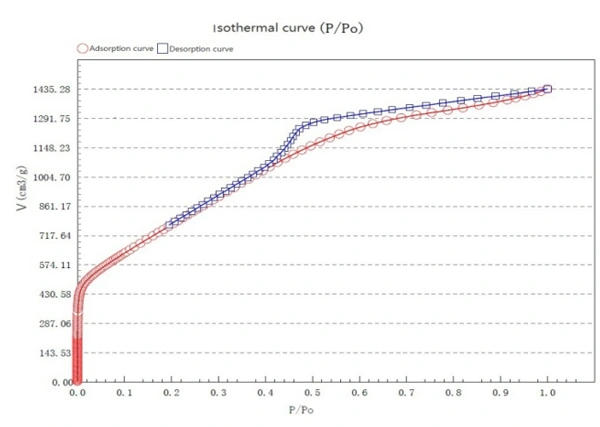
  • Adsorption and desorption isotherms
  • Single-/Multipoint BET surface area
  • Langmuir surface area
  • STSA-surface area
  • Pore size distribution according to BJH
  • T-plot
  • Dubinin-Radushkevich
  • Horvath-Kawazoe
  • Saito-Foley

Typical Analysis Result

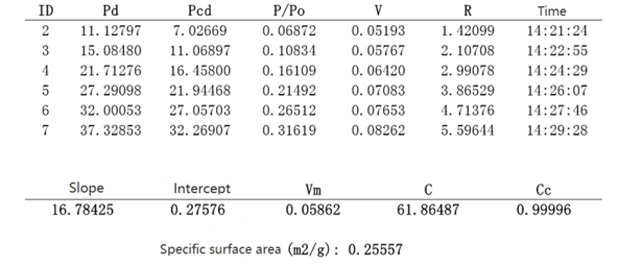
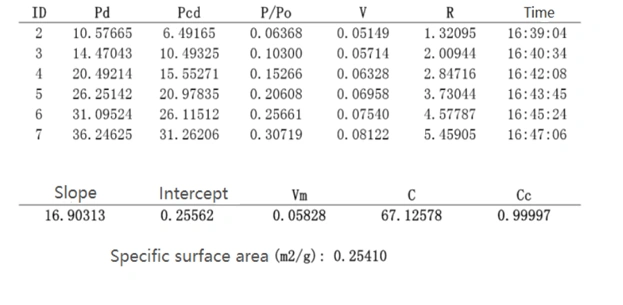
The specific surface area test results for iron ore powder are shown in the figure below. As a material with an inherently low specific surface area, the repeatability error in the measurements is only 0.0015 m²/g, demonstrating high testing precision.

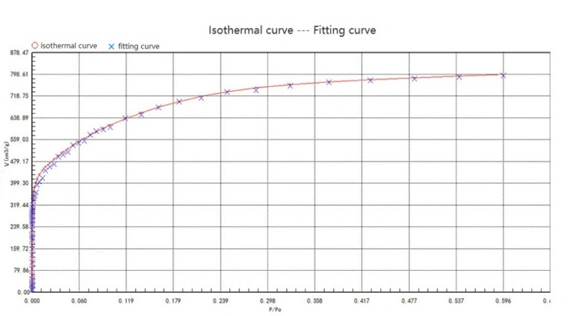
Adsorption and Desorption Isotherms of typical macroporous material – silica.

Analysis of pore size distribution of activated carbon materials by NLDFT.

Specification

ModelMicro 200
Specific Model200A200B200C
Analysis Ports222
P0 Transducer222
Analysis Pressure Transducer246
Pressure Transducers ConfigurationPort 1: 1000 torr
Port 2: 1000 torr
Port 1: 1000 torr, 10 torr
Port 2: 1000 torr, 10 torr (Optional)
Port 1: 1000 torr, 10 torr, 1 (0.1) torr
Port 2: 1000 torr, 10 torr, 1 (0.1) torr
Pressure Transducer Accuracy and ResolutionAccuracy: 0.05% F.S.
Resolution: 0.0005% F.S.
1000 torr – Accuracy: 0.05% F.S., Resolution: 0.0005% F.S.
10 torr / 1 torr – Accuracy: 0.2% RDG, Resolution: 0.003% F.S.
0.1 torr – Accuracy: 0.5% RDG, Resolution: 0.003% F.S.
Pump2 mechanical pumps (ultimate vacuum 10-1 Pa;
minimal 7.5 × 10⁻⁴ torr):
1 analysis, 1 degas
2 mechanical pumps (ultimate vacuum 10-1 Pa; minimal 7.5 × 10⁻⁴ torr): 1 analysis, 1 degas
1 turbo molecular pump (ultimate vacuum 10-8 Pa; minimal 7.5 × 10⁻¹¹ torr)
P/P0 Range10-4 – 0.99810-6 – 0.99810-8 – 0.998
Specific Surface Area≥ 0.01 m²/g
test repeatability: RSD ≤ ±1.0%
N2: 0.01 m²/g to upper limit
Kr: 0.0005 m²/g to upper limit
Test repeatability: RSD ≤ ±1.0%
Pore Size Range0.35–500 nm
test repeatability: ≤ ±0.02 nm
(*Achieved with CO2)
0.35–500 nm, test repeatability: ≤ ±0.02 nm
0–20 nm (*Achieved with CO2)
7–500 nm, test repeatability: ≤ ±0.02 nm, N2 Adsorption
0.35–500 nm, test repeatability: ≤ ±0.02 nm
Pore Volume≥ 0.0001 cm³/g
Degassing Ports2 in-situ; 2 ex-situ
AdsorbatesN2, CO2, Ar, H2, O2, CO, CH4, etc.N2, CO2, Ar, Kr, H2, O2, CO, CH4, etc.
Cold Trap2
Dimensions and WeightL 36.0 in (915 mm) × W 22.4 in (570 mm) × H 36.0 in (915 mm),
261.8 lbs (119 kg)
Power Requirements110 V or 200–240 VAC, 50/60 Hz, maximum power 300 W

Related Products