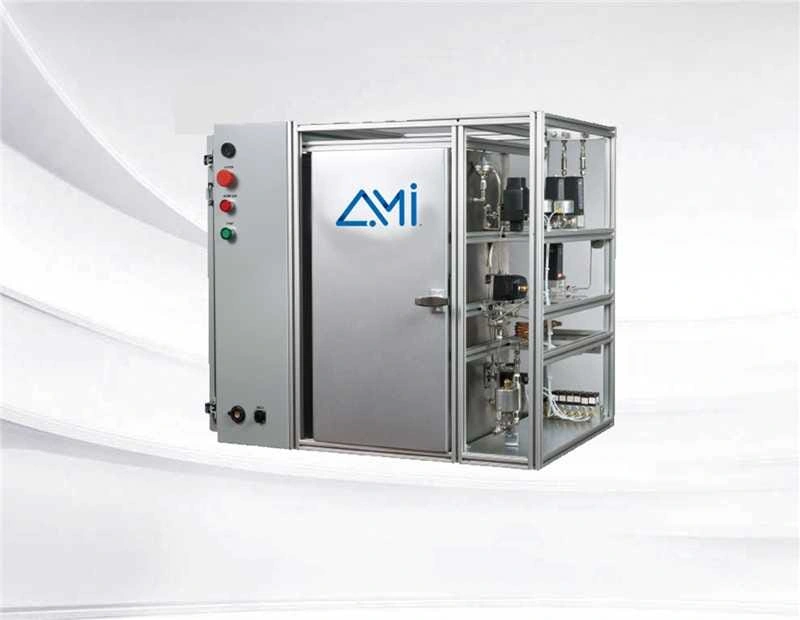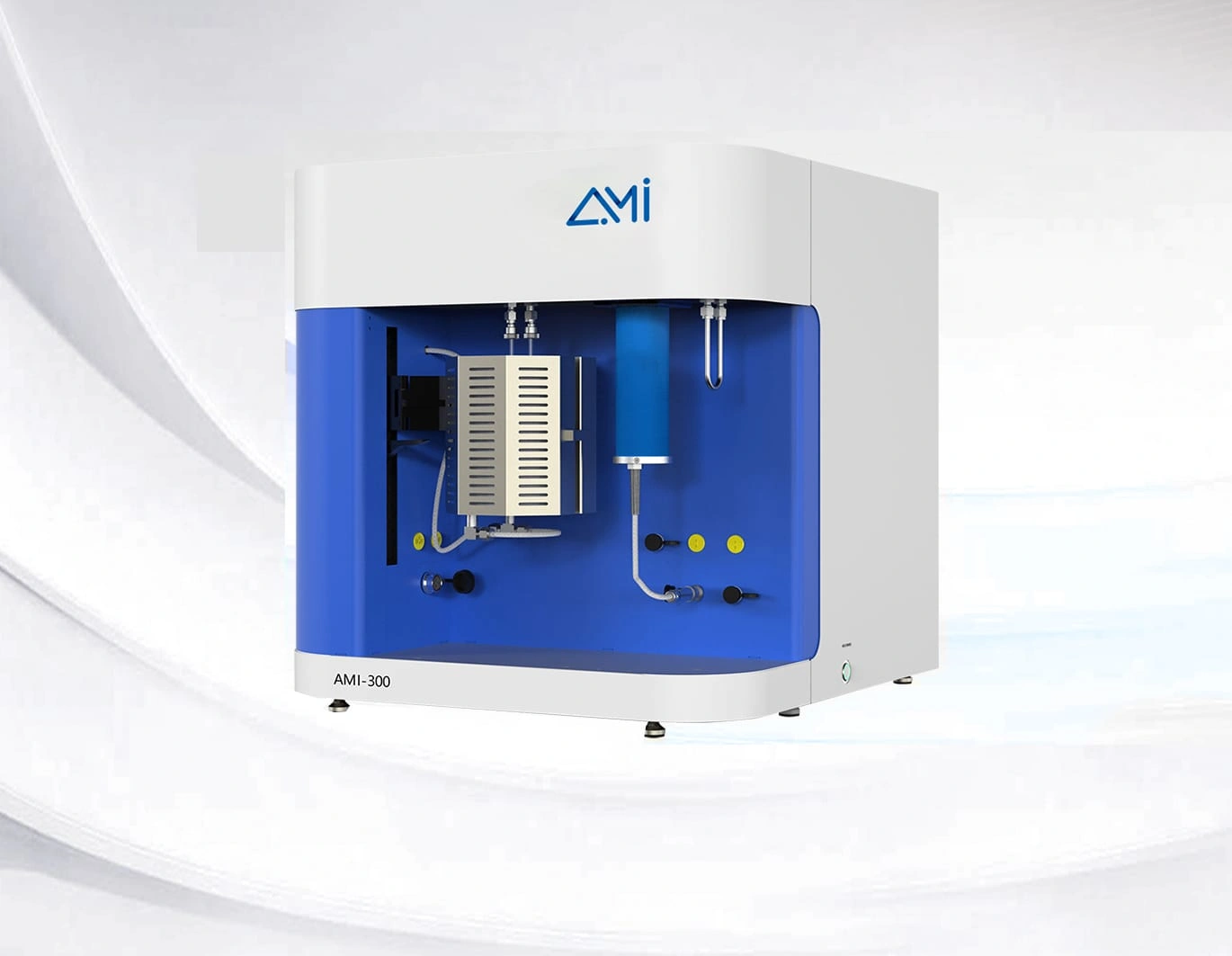
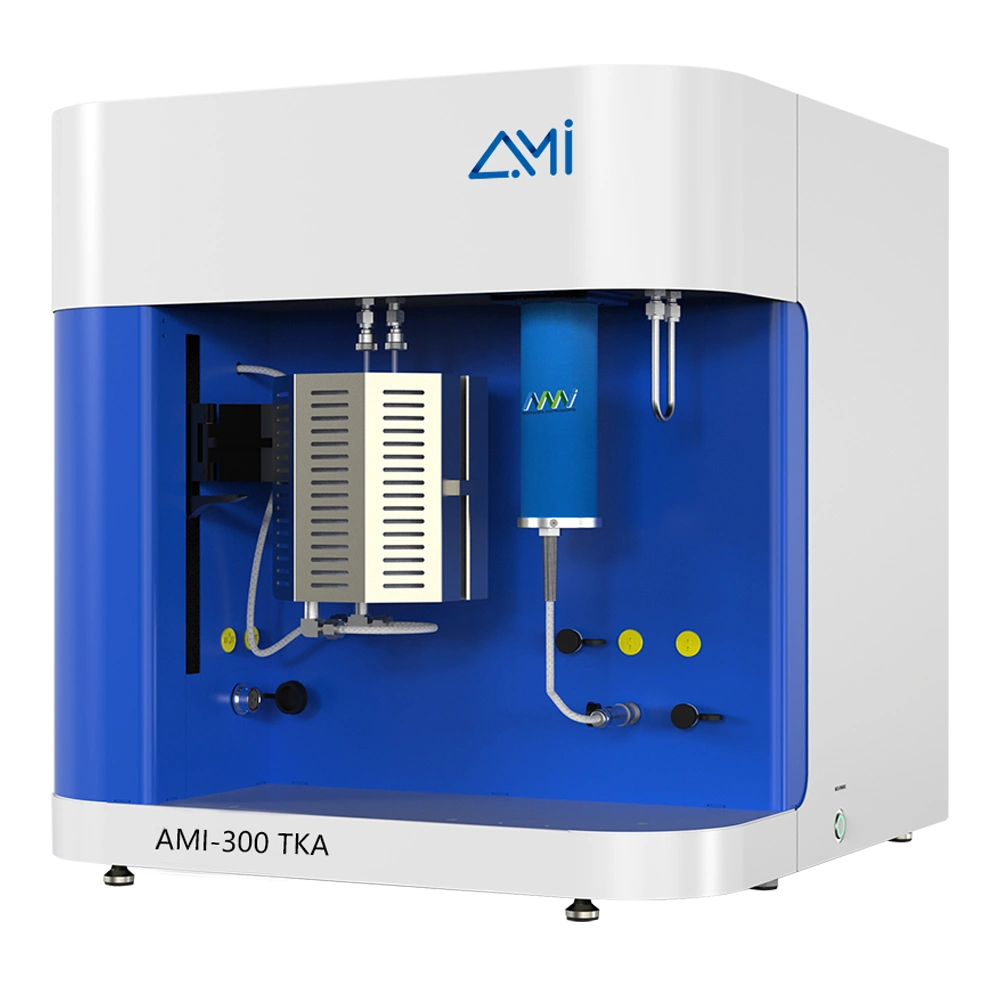

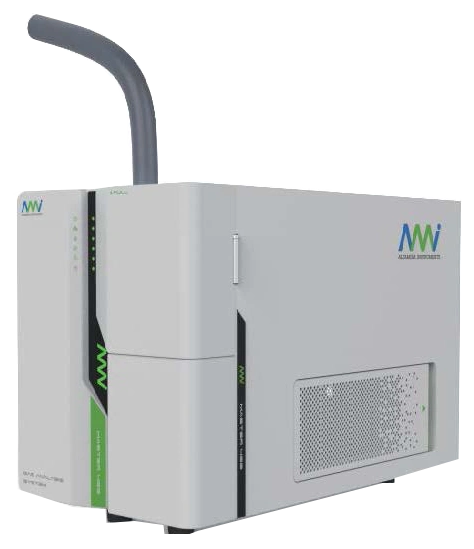
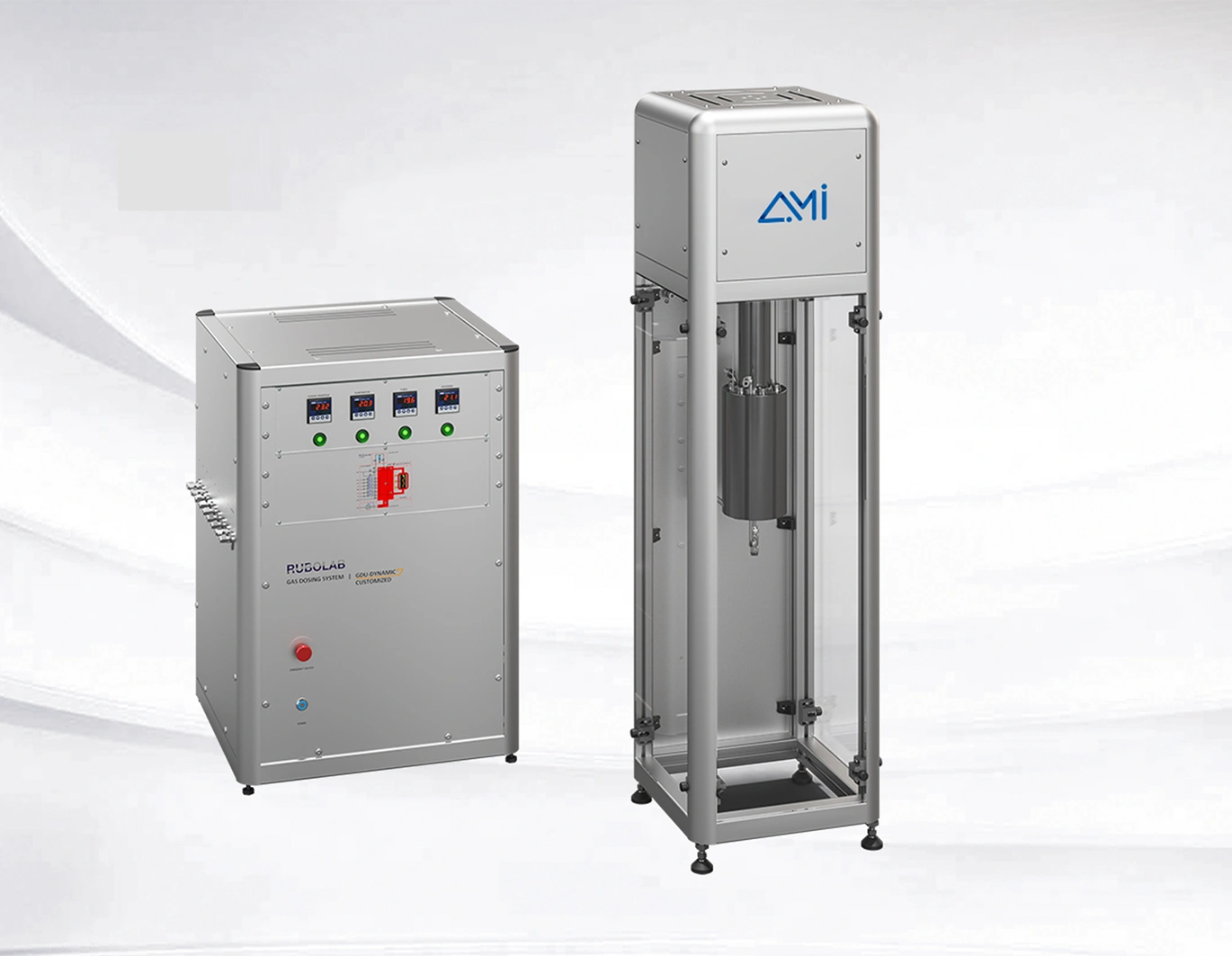
AMI 300 SSITKA

● Enables detailed investigation of catalytic mechanisms, intermediate lifetimes, and surface kinetics.
● Features precise pressure equalization for rapid and accurate isotopic switching.
● Precise gas control via 4 MFCs and 12 gas inlets for complex experiment designs.

Product Overview

Introduction

The AMI-300 SSITKA is a high-performance chemisorption analyzer integrated with Steady-State Isotopic Transient Kinetic Analysis (SSITKA) capabilities. Compared to conventional chemisorption analyzers, the AMI-300 SSITKA employs SSITKA technology to enable in-depth investigation of catalyst reaction mechanisms and properties. The instrument rapidly switches the isotopic composition of a reactant within the reaction system while monitoring the relaxation dynamics of labeled products in real time. This methodology facilitates precise analysis of reaction mechanisms, measurement of kinetic parameters, catalyst characterization, and differentiation of parallel reaction pathways.

AMI-300 SSITKA Functions:

• Steady-State Isotopic Transient Kinetic Analysis (SSITKA)
• Temperature-Programmed Desorption (TPD)
• Temperature-Programmed Reduction/Oxidation (TPR/O)
• Temperature-Programmed Surface Reaction (TPSR)
• Pulse Chemisorption
• Dynamic BET
• Vapor Dosing (option)

The AMI-300 SSITKA distinguishes itself through its SSITKA experimental capability, which initiates isotopic switching only after the reaction system reaches steady-state conditions. For elements with negligible isotope effects (predominantly non- hydrogen systems), the instrument enables isotope tracing while maintaining continuous steady-state operation, achieving non-invasive in situ analysis. This methodology provides real-time tracking of surface active sites, quantifies intermediate species lifetimes, and resolves dynamic evolution of reaction pathways without perturbing catalytic processes.

Features

Precision flow control system

High-precision MFCs with flow rates from 2-100 sccm.

High-Stability Programmed Temperature Reaction System

Engineered with precision temperature control up to 1200°C, this system achieves linear heating rates from 0.1 to 50°C/min with ±0.1°C regulation accuracy.

Rapid Cooling

Featuring automated control, the system enables rapid furnace cooling via air purging to reduce experimental duration.

Minimal Dead Volume

As an instrument capable of performing SSITKA experiments, the AMI-300 SSITKA utilizes 1/16 tubing with an optimized compact design, effectively minimizing dead volume.

Pressure Equalization and valve switching

SSITKA experiments require precise pressure equalization between two streams and rapid valve switching to minimize pressure spike variations in the mass spectrometer signal, ensuring accurate measurements.
Safety

The instrument features a proprietary over-temperature cutoff system for heating furnaces, pressure relief valves on the reactor and sparger, and firmware alarms at hardware limits. User-configurable alarms enhance lab safety by allowing customized alerts based on specific protocols.

Valve oven temperature control

The instrument’s internal pipelines are heated by an oven, reaching a maximum temperature of 150°C. This ensures uniform heating, preventing “cold spots” in the stainless steel pipelines, valves, and TCD detector, thereby maintaining stable operation and accurate measurements.

High-Precision TCD Detector

The instrument comes standard with a high-precision rhenium-tungsten filament TCD (Thermal Conductivity Detector), featuring a constant temperature system capable of maintaining temperatures up to 200°C.

Cold Trap

The sample tube downstream is equipped with a dedicated cold trap filled with desiccant, designed to remove condensables prior to the gas stream entering the TCD.

Vapor Generator

The system is compatible with a vapor generator to vaporize liquid adsorbate for subsequent analysis, with a maximum operating temperature of 100°C.

Software

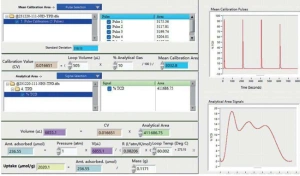
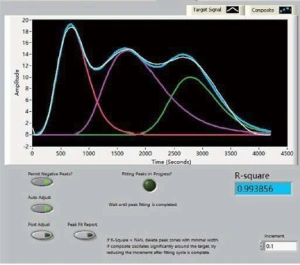
The AMI-300 SSITKA software delivers comprehensive control and analytical capabilities, supporting flexible configuration of TPD, TPO, TPR, TPRS, pulse calibration, and other experiments through programmable sequences (up to 99 steps). This automated system performs advanced spectral processing including peak deconvolution, integration, differentiation, and superposition analysis to extract critical catalyst characteristics such as surface acid/base site distribution, activation energy values, and reaction kinetic parameters.

Adsorption Capacity Calculation

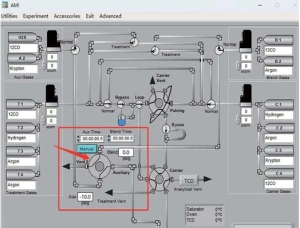
During SSITKA experiments, the system executes isotopic switching through specialized gas circuitry integrated with mass spectrometry detection. As illustrated in the schematic interface diagram, the gas flow control system employs a four-way valve (indicated by the red arrow) to perform transient switching between two feed streams. This valving mechanism enables the instantaneous transition of the reactant from 12CO to 13CO while maintaining experimental continuity.

Peak Fitting
AMI-300 SSITKA Software Interface

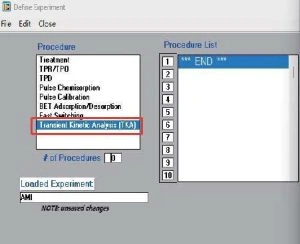
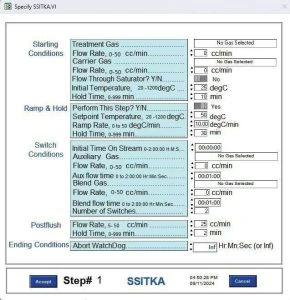
SSITKA experiments can be configured through the program interface shown below, featuring fully automated operation that eliminates the need for manual intervention. This streamlined process ensures operational reliability while minimizing human-induced errors, thereby ensuring precise test results.

SSITKA Procedure Setup

Applications

Ammonia Synthesis:

Monitoring 15N2 dissociation dynamics on iron- based catalysts to identify rate- determining steps.

Fischer-TropschSynthesis:

Analyzing CO dissociation pathways on Co/Fe catalysts to optimize product selectivity.

Automotive Emission Control:

Investigating transient surface intermediates (e.g., adsorbed NO, NH3) during NO reduction reactions to enhance low- temperature activity in Pt-Rh catalysts.

CO2 Reduction:

Differentiating rate- determining steps between photo generated electron transfer kinetics and surface reaction processes.

CO2 Hydrogenation

(Methanol/Hydrocarbon Synthesis): Tracking dynamic evolution of surface intermediates (e.g., formate/carbonate species) to map CO2 activation pathways, enabling selective optimization of Cu-ZnO-based catalysts.

Methane Reforming:

Characterizing carbon species accumulation/elimination mechanisms on Ni/Co-based catalysts to mitigate carbon deposition-induced deactivation.

Sulfur Poisoning Mechanisms:

Investigate the poisoning effects of H2S on catalysts (e.g., Ni-based systems), elucidating the dynamic processes of sulfur species coverage on active sites.

Surface Active Site Characterization:

Differentiate the contributions of distinct surface active sites (e.g., step-edge sites, defect sites) to catalytic reactivity.

Examples

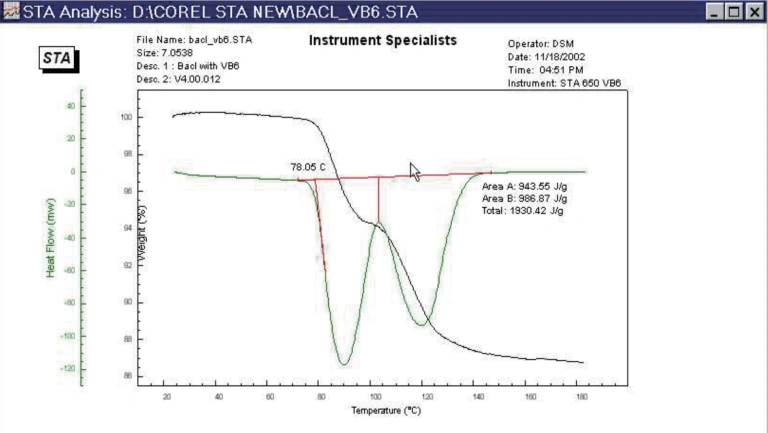
Barium Chloride

This is an example of a reference material that shows temperature and enthalpy accuracy. In addition, this represents a good example of a fused peak analysis.

Calcium Oxalate

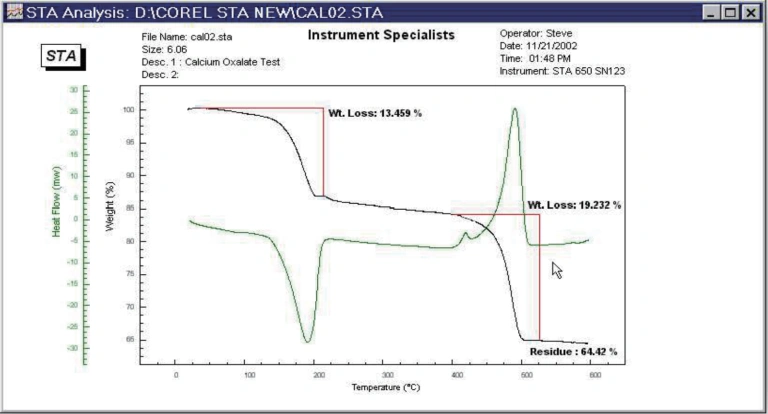
Calcium Oxalate is an excellent demonstration material for both DSC and TGA. This sample was run in the presence of Oxygen. The first DSC peak has an associated weight loss and represents bound water.

Specification

Chemisorption Analyzer AMI-300 SSITKA
Mass Spectrometer Master 400
AMI-400TPxAdvanced Gas Analysis & TPD System
Mass Flow Controller Quantity4
Gas Inlet Quantity12
Temperature RangeStandard: Room Temperature – 1200°C
Optional: −130°C – 1200°C
Heating Rate0.1°C – 50°C/min
Maximum Flow Rate100 sccm
Vapor FunctionMaximum temperature 100°C (optional)
Infrared SpectrometerFTIR analysis (optional)
Mass RangeOptional: 1–100 / 200 / 300 amu
Detection Limit≤ 500 ppb
Scanning Rate1 ms – 16 s/amu
Sampling Pressure0.5 bar – 1.5 bar
Maximum Heating Temperature of Sample Tube200°C
Filament MaterialIridium filament
DetectorFaraday cup / SEM electron multiplier

Related Products