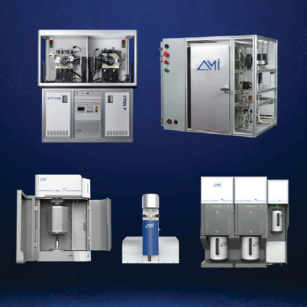
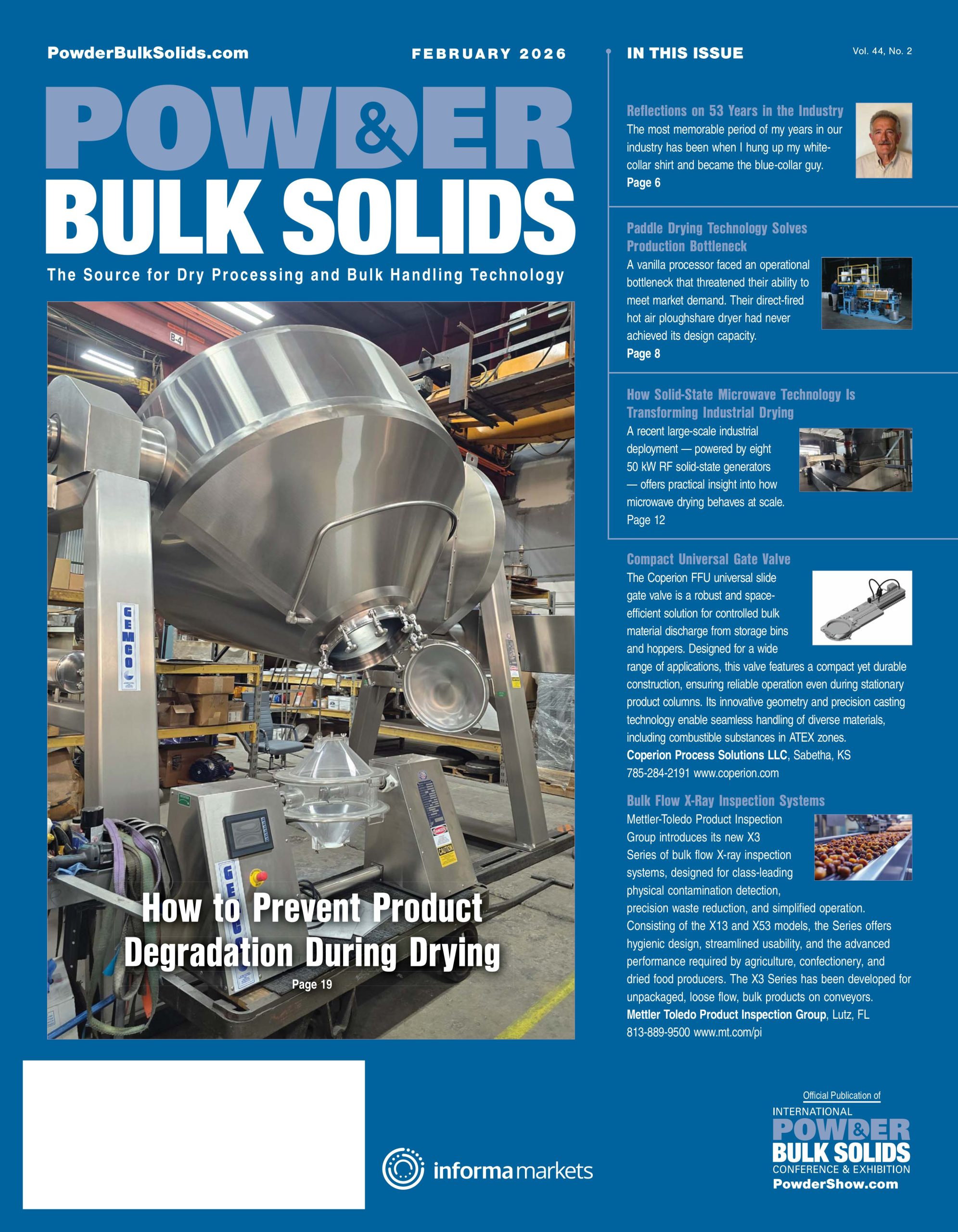
AMI Instruments has been selected for inclusion in the Editor’s Spotlight on Page 15 of the February edition of Powder & Bulk Solids magazine. The feature highlights AMI’s advanced solutions supporting measurement and analysis of powders and bulk solid materials used across research and industrial applications.
Performance of powders and bulk solids is strongly influenced by interconnected material properties — including surface characteristics, pore structure, adsorption behavior, thermal response, and phase composition. Accurate characterization is essential for consistent processing, confident scale-up, and stable product quality.
Publication Recognition
Editor’s Spotlight — February Issue
Publication: Powder & Bulk Solids Magazine | Feature: Editor’s Spotlight | Edition: February | Page: 15
Visit the publication website: powderbulksolids.com
Why This Recognition Matters
- Highlights AMI’s contribution to improving measurement reliability and process understanding for powder and bulk solids applications.
- Reinforces how surface area, porosity, and adsorption-driven behavior can influence flowability, efficiency, and reactive performance.
- Supports manufacturers and researchers working to reduce variability, improve QC, and minimize risks like caking or yield loss.
- Expands industry awareness of comprehensive measurement approaches for powders, porous materials, and bulk solids processing.
From the Magazine
Comprehensive Measurement for Powders
The performance of powder and bulk solids is governed by an interconnected set of material properties, including surface chemistry, pore structure, thermal behavior, and crystalline phase composition. Understanding how these characteristics interact is essential for achieving consistent processing, reliable scale-up, and stable product quality. Chemisorption and gas adsorption techniques quantify surface area, porosity, and gas-solid interactions that influence flowability, adsorption efficiency, and reactive performance. Thermal analysis methods such as TGA and DSC provide insight into moisture content, decomposition behavior, and phase transitions that can lead to caking or yield loss during processing and storage. X-ray diffraction further complements this understanding by identifying crystalline phases and structural changes that affect stability and reactivity.